Lemon Balm

What It Is
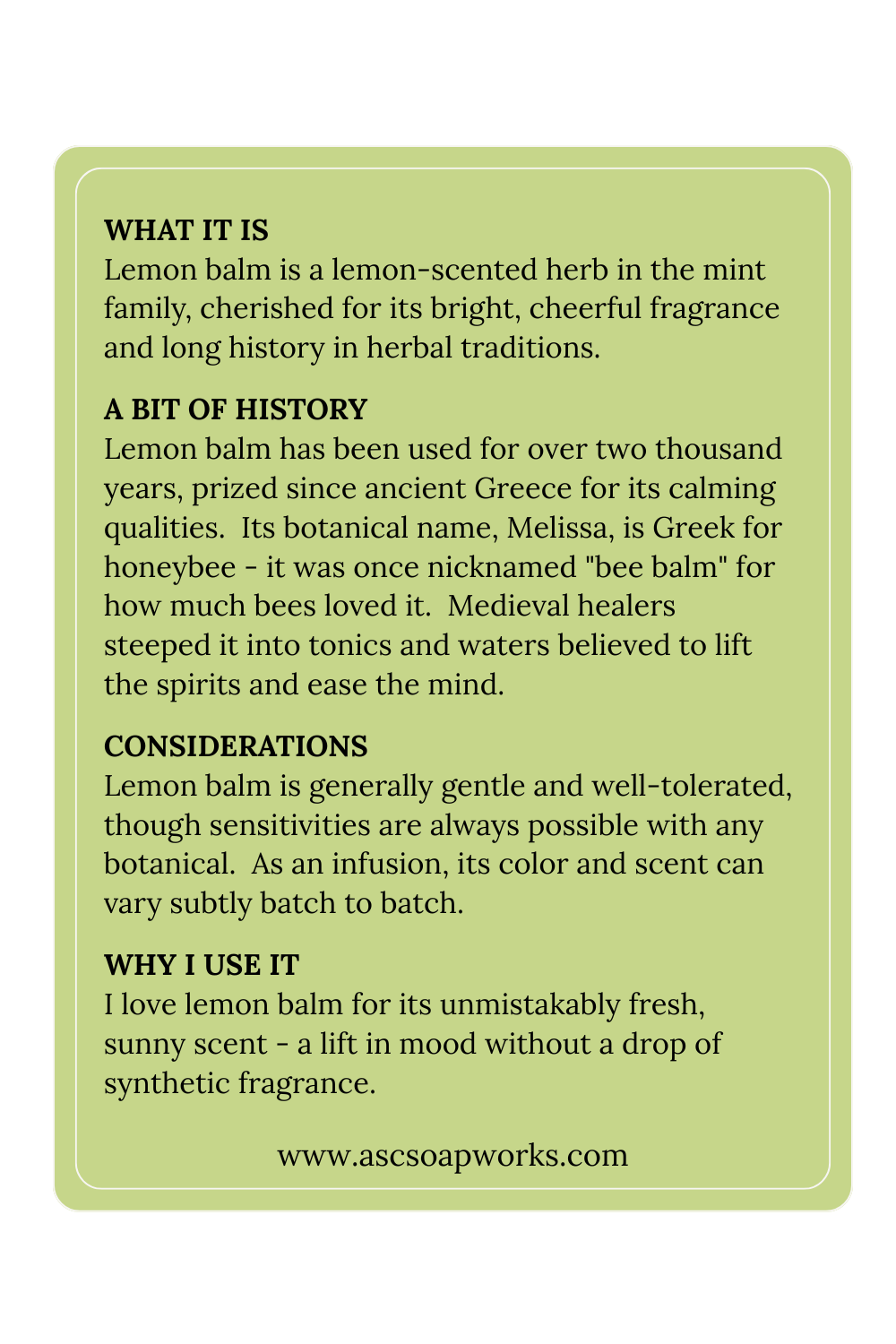
Lemon balm is a lemon-scented herb in the mint family, native to the Mediterranean and grown in gardens for centuries. Its leaves carry a bright, citrusy fragrance even before they're touched - crush one and the scent is unmistakable. It's a plant that shows up more in tea cups and herb gardens than skincare shelves, which is part of what makes it such an interesting one to work with.
A Bit of History
Lemon balm has been used for over two thousand years, prized since ancient Greece for its calming qualities. Its botanical name, Melissa, is Greek for honeybee - bees are famously drawn to its flowers, and the plant was once nicknamed "bee balm" for it. Medieval herbalists steeped it into tonics and waters believed to lift the spirits, and it remains a staple of herbal tea blends today.
In the Soap
Lemon balm shows up in the Lemon Balm Bloom bar in three simple ways: infused into olive oil as the base, brewed as tea and used in place of water in the lye solution, and sprinkled dried on top as a natural finishing touch. It's a whole-plant approach - one ingredient, three honest uses.
Considerations
Lemon balm is generally gentle and well-tolerated, though as with any botanical, individual sensitivities are always possible. Because it's used as an infusion rather than a distilled essential oil, its color and scent can shift subtly from batch to batch depending on the fresh herb. We favor these whole-plant infusions over concentrated extracts - a little more variation, but a more honest connection to the plant itself.
Why I Use It
I love lemon balm for its unmistakably fresh, sunny scent - a lift in mood without a drop of synthetic fragrance. Letting one plant show up three different ways in a single bar felt like a nice way to let the ingredient speak for itself.
Where You'll Find It at ASC Soapworks
Lemon balm is featured in the Lemon Balm Bloom bar, part of the Bloom Series.
This page is part of the ongoing Ingredient Field Guide.
To explore other ingredients, return to the main guide: Ingredient Field Guide